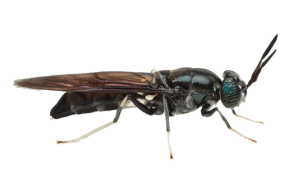
Marine omega-3 fatty acids EPA and DHA — typically associated with fish oil capsules and algal supplements — have now been documented in black soldier fly (BSF) larvae reared on fish-processing by-products, according to NRGene Canada. The Saskatchewan-based insect genomics company announced the milestone alongside its partner Ile-a-la-Crosse Fish Company Inc., marking a meaningful step toward a higher-value insect-derived ingredient for poultry nutrition.
The Trial Data
A semi-industrial run at the North American Insect Center (NAIC) in Saskatoon processed 0.3 metric tons of feed containing 50% fish-processing by-products, producing approximately 90 kilograms of MaxBSF™ larvae over an eleven-day cycle — a five-day nursery stage followed by a six-day grow-out — at a wet feed conversion ratio of approximately 3.3. Analysis by Prairie Tide Diversified Inc., a CALA-accredited laboratory, found fish-fed larvae contained 5.16% to 7.94% total omega-3 as a share of total fatty acids, versus 1.12% in larvae of the same genetics on standard feed. EPA ranged from 1.14% to 1.89% of total fatty acids; DHA from 0.37% to 0.65%. Neither was detected in the control group. The omega-6 to omega-3 ratio fell to as low as 1.2:1, compared with 12.8:1 in standard-feed larvae — a figure relevant to formulators targeting balanced fatty acid profiles in functional animal nutrition.
"Conventional BSF larvae generally contain very limited levels of EPA and DHA," said Dr. Ben Gradus, Director of Product, BSF at NRGene Canada. "By incorporating fish-processing by-products into the feed, we can produce MaxBSF™ larvae that combine insect protein with valuable marine omega-3 fatty acids."
Ingredient and Market Implications
The nutritional upgrade matters most for NRGene Canada's dried larvae product, MaxBites™, positioned as a poultry feed supplement. The working hypothesis — consistent with existing pasture-raised egg research — is that hens consuming an omega-3-enriched insect meal could produce eggs with elevated EPA and DHA, a functional food angle that commands premium positioning at retail. Omega-3-enriched eggs are an established and growing segment within the protein and functional nutrition category, and a domestic insect-derived EPA/DHA input could reduce reliance on imported fish oil in finished poultry rations.
The fish-by-product feedstock presents formulation challenges — high moisture and fat content accelerates spoilage — that NRGene Canada addressed with a purpose-built feed recipe and the high-performing MaxBSF™ genetics bred through its AI-driven genomics platform. The genetics are developed without GMO modification, gene editing, or CRISPR, a clean-label provenance increasingly valued by ingredient buyers.
Scale-Up Roadmap
With the feed recipe validated, NRGene Canada and Ile-a-la-Crosse Fish Company are planning an on-site BSF rearing facility in Ile-a-la-Crosse, Saskatchewan, sized to the volume of by-products the region generates. Rearing locally eliminates cold-chain logistics for a highly perishable feedstock. Neonates would be supplied by FairGene — a joint venture between NRGene Canada and Fairville Farming Co. in Bassano, Alberta — which began BSF egg production in July 2026. The arrangement exemplifies what NRGene Canada describes as a hub-and-spoke model: centralized egg and neonate production paired with regional rearing sites matched to local organic waste streams.
Chief Business Officer Yossi Levi framed the approach as replicable beyond Saskatchewan. "We take a local organic by-product, develop a dedicated feed, supply high-quality neonates from a central egg facility and establish the rearing operation close to the feedstock," he said. "Many regional by-product streams could benefit from the same approach." For ingredient buyers and contract feed manufacturers tracking alternative protein and omega-3 supply chain diversification, the model offers a regionally distributed sourcing template worth watching.
Written by Michael Politz, Author of Guide to Restaurant Success: The Proven Process for Starting Any Restaurant Business From Scratch to Success (ISBN: 978-1-119-66896-1), Founder of Food & Beverage Magazine, the leading online magazine and resource in the industry. Designer of the Bluetooth logo and recognized in Entrepreneur Magazine's "Top 40 Under 40" for founding American Wholesale Floral, Politz is also the Co-founder of the Proof Awards and the CPG Awards and a partner in numerous consumer brands across the food and beverage sector.