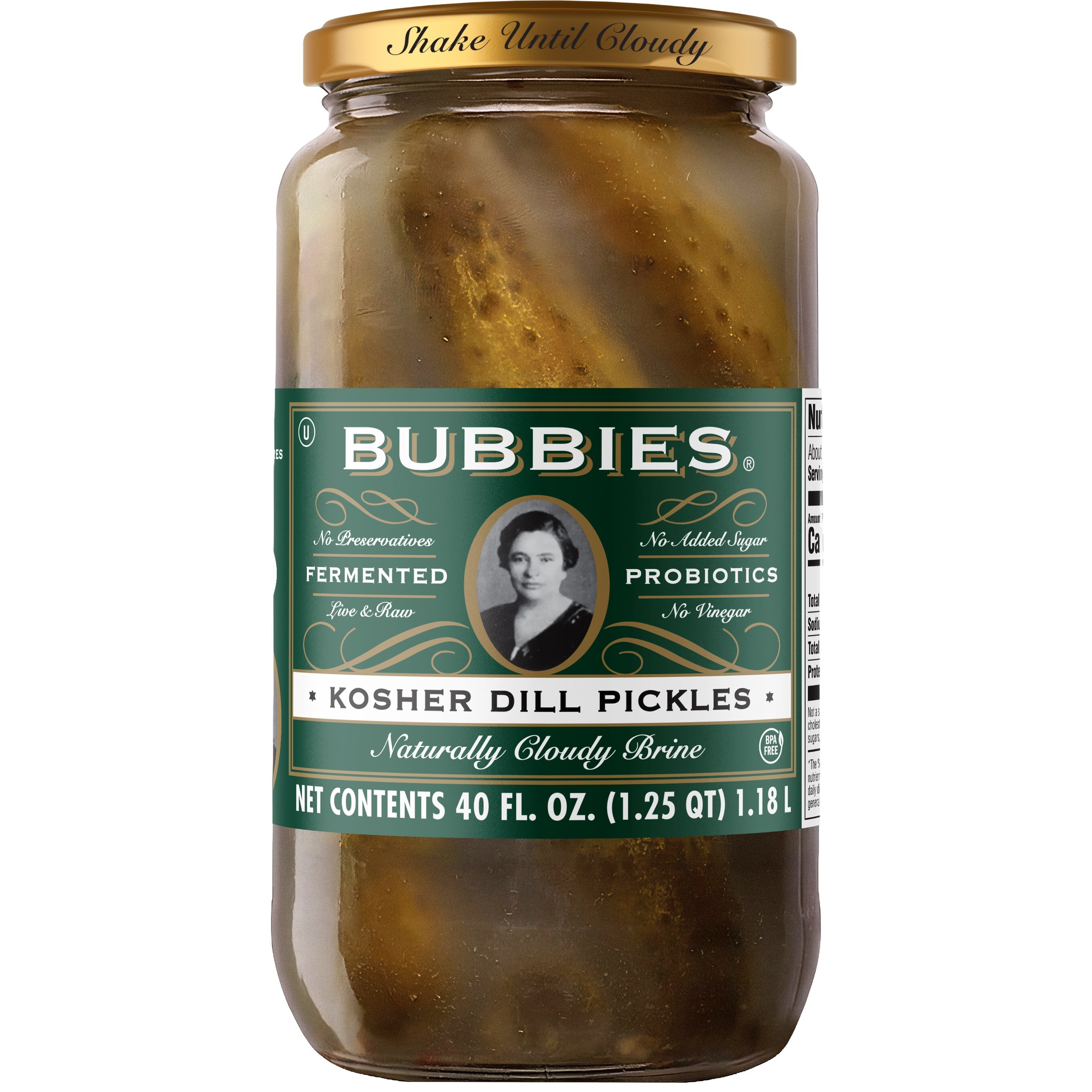
Bubbies, the flagship brand of Fermented Food Holdings, Inc. (FFH) and the self-described top-selling refrigerated fermented pickle brand in the United States, has secured placement in Costco clubs across the Southeast region with a Costco-exclusive 40-oz. jar of its Kosher Dill Pickles. The move marks one of the most visible club-channel entries for a traditionally refrigerated, naturally fermented pickle brand and signals growing mainstream appetite for products positioned at the intersection of culinary familiarity and functional benefit.
Unlike vinegar-acidified shelf-stable pickles, Bubbies' Kosher Dills are produced through traditional lacto-fermentation — a process in which naturally occurring Lactobacillus cultures convert sugars into lactic acid, producing a live-culture finished product without the addition of vinegar. That biological distinction is commercially meaningful: live-culture fermented vegetables occupy a separate and premium tier within the broader pickle category, drawing comparisons to refrigerated kefir or raw-cultured sauerkraut in terms of consumer positioning and cold-chain requirements. While Bubbies does not carry a labeled CFU count or a probiotic structure-function claim on its packaging, the brand's marketing leans into the language of fermentation heritage and ingredient simplicity, attributes increasingly valued by functional food consumers. Operators considering white-label or co-manufacturing partnerships in the fermented vegetable space should note the supply-chain complexity that authentic lacto-fermentation introduces relative to conventional pickle production.
The refrigerated fermented foods category has been a consistent growth vector within natural and specialty retail, driven by consumer interest in gut health, the microbiome, and minimally processed ingredients. Club-channel distribution via Costco represents a significant step-change in volume potential and consumer reach for FFH. Costco's Southeast footprint spans a consumer base that has historically indexed lower for refrigerated fermented specialty products compared to the Pacific Coast and Northeast, making this placement a meaningful test of category crossover appeal into broader demographics. The 40-oz. club-exclusive format also reinforces a household-consumption positioning that differs from the single-serve or smaller-format SKUs typical of natural channel shelves. For more on how fermented food brands are navigating retail channel strategy and distribution expansion, the club format offers a high-velocity proof point worth tracking.
FFH, which positions itself as a leader in high-quality fermented and functional foods, continues to leverage Bubbies as its anchor retail brand. The Costco Southeast launch is likely a regional pilot ahead of potential national club rollout, a common expansion pattern for refrigerated brands managing cold-chain logistics at scale. Industry observers in the probiotic and fermented foods segment will be watching velocity data from this placement closely, as club-channel performance often informs subsequent conventional grocery and foodservice decisions. For FFH, cracking Costco's Southeast clubs with a value-format SKU represents both a volume opportunity and a brand-awareness play in markets where Bubbies has historically had lighter penetration.
Written by Michael Politz, Author of Guide to Restaurant Success: The Proven Process for Starting Any Restaurant Business From Scratch to Success (ISBN: 978-1-119-66896-1), Founder of Food & Beverage Magazine, the leading online magazine and resource in the industry. Designer of the Bluetooth logo and recognized in Entrepreneur Magazine's "Top 40 Under 40" for founding American Wholesale Floral, Politz is also the Co-founder of the Proof Awards and the CPG Awards and a partner in numerous consumer brands across the food and beverage sector.