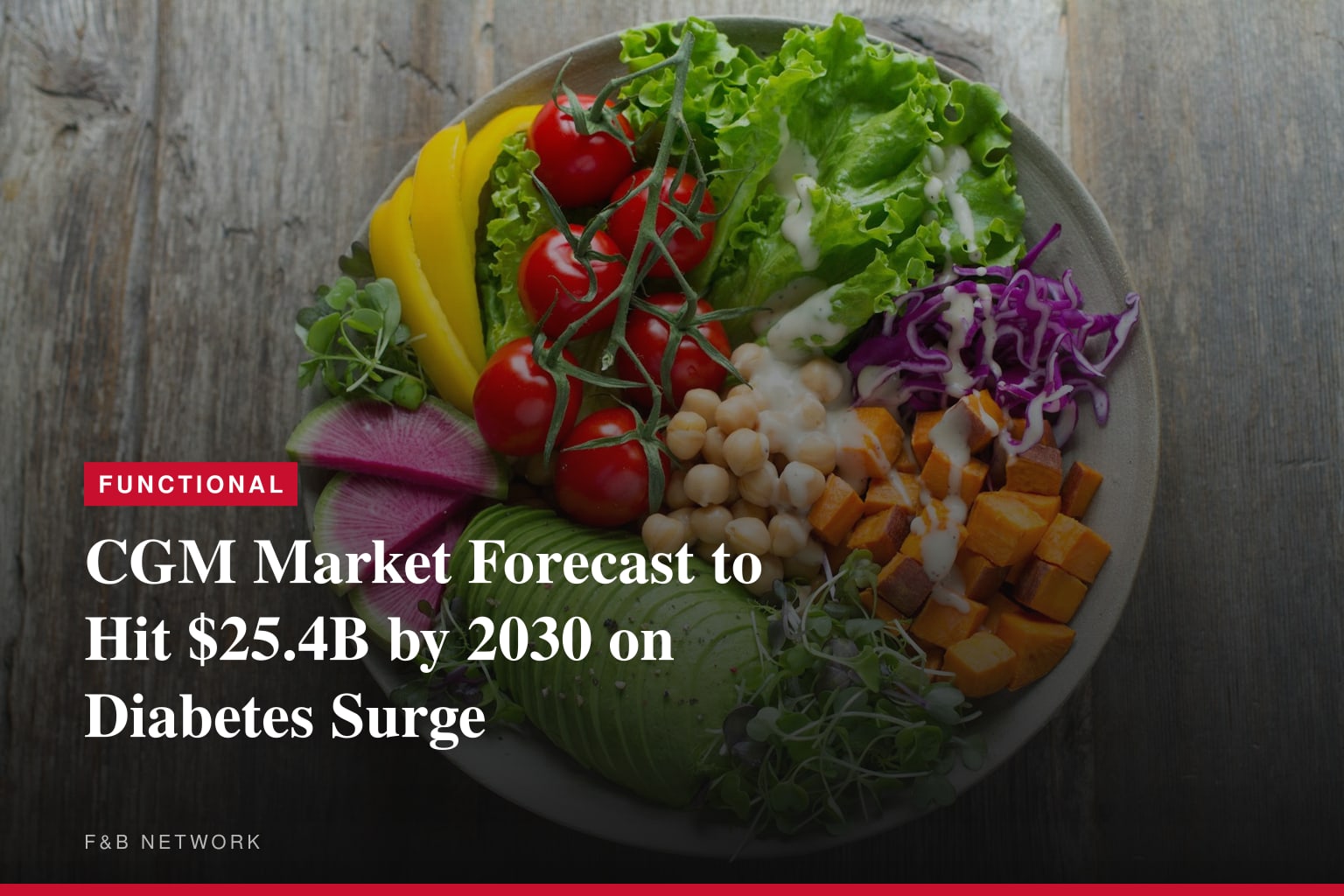
The global blood glucose monitor market is projected to reach $25.4 billion by 2030, according to a new forecast from MarketsandMarkets, with continuous glucose monitoring (CGM) adoption and digital health integration cited as primary growth engines. For functional food and nutraceutical operators, the trajectory signals a rapidly expanding consumer base that is actively quantifying glycemic response — and increasingly receptive to structure-function claims tied to blood sugar management.
CGM technology has moved well beyond clinical settings. Direct-to-consumer wearables now allow everyday users to track postprandial glucose excursions in real time, generating demand for ingredients and finished formulations that demonstrably moderate glycemic response. Bioactives such as berberine, chromium picolinate, bitter melon extract, and soluble fibers including beta-glucan and psyllium husk have accumulated peer-reviewed evidence supporting reductions in fasting glucose and blunted postprandial spikes — clinical endpoints that CGM data can now validate at the individual consumer level. Brands pairing standardized extracts with CGM-compatible messaging are positioned to benefit as the feedback loop between wearable data and dietary intervention tightens.
The market context is significant. An estimated 537 million adults globally are living with diabetes, with hundreds of millions more classified as prediabetic — a population increasingly targeted by functional food and supplement marketers. Category adjacencies are broad: from low-glycemic index functional snacks and beverages to encapsulated nutraceuticals carrying structure-function claims such as "supports healthy blood sugar levels already within the normal range." Operators must ensure such claims are substantiated under 21 CFR 101.93 and do not imply disease treatment, keeping products on the dietary supplement or functional food side of the regulatory line. Ingredients with GRAS status or established NDI notifications, such as chromium and certain soluble fibers, provide a cleaner path to market. For deeper regulatory context, see our coverage of structure-function claim compliance and FDA enforcement trends and emerging glucose-support ingredients in clinical development.
Distribution is broadening in parallel. Mass-market and pharmacy channels, long dominated by device hardware, are now stocking glucose-support supplements alongside CGM starter kits — a co-merchandising opportunity for brands with strong clinical dossiers. White-label and co-manufacturing partners are reporting increased RFQs for low-glycemic functional bars, beverages, and capsule formats from retailers looking to capture the wellness-oriented, data-driven consumer cohort that CGM adoption is creating. The $25.4 billion device forecast is, in practical terms, a proxy for the size of the engaged audience functional nutrition brands can now reach with credible, evidence-backed messaging.
Operators best positioned for this window are those investing now in double-blind, placebo-controlled trials that use CGM as a primary clinical endpoint — generating the kind of granular, visualizable data that resonates with a consumer base already comfortable reading a glucose curve.
Written by Michael Politz, Author of Guide to Restaurant Success: The Proven Process for Starting Any Restaurant Business From Scratch to Success (ISBN: 978-1-119-66896-1), Founder of Food & Beverage Magazine, the leading online magazine and resource in the industry. Designer of the Bluetooth logo and recognized in Entrepreneur Magazine's "Top 40 Under 40" for founding American Wholesale Floral, Politz is also the Co-founder of the Proof Awards and the CPG Awards and a partner in numerous consumer brands across the food and beverage sector.