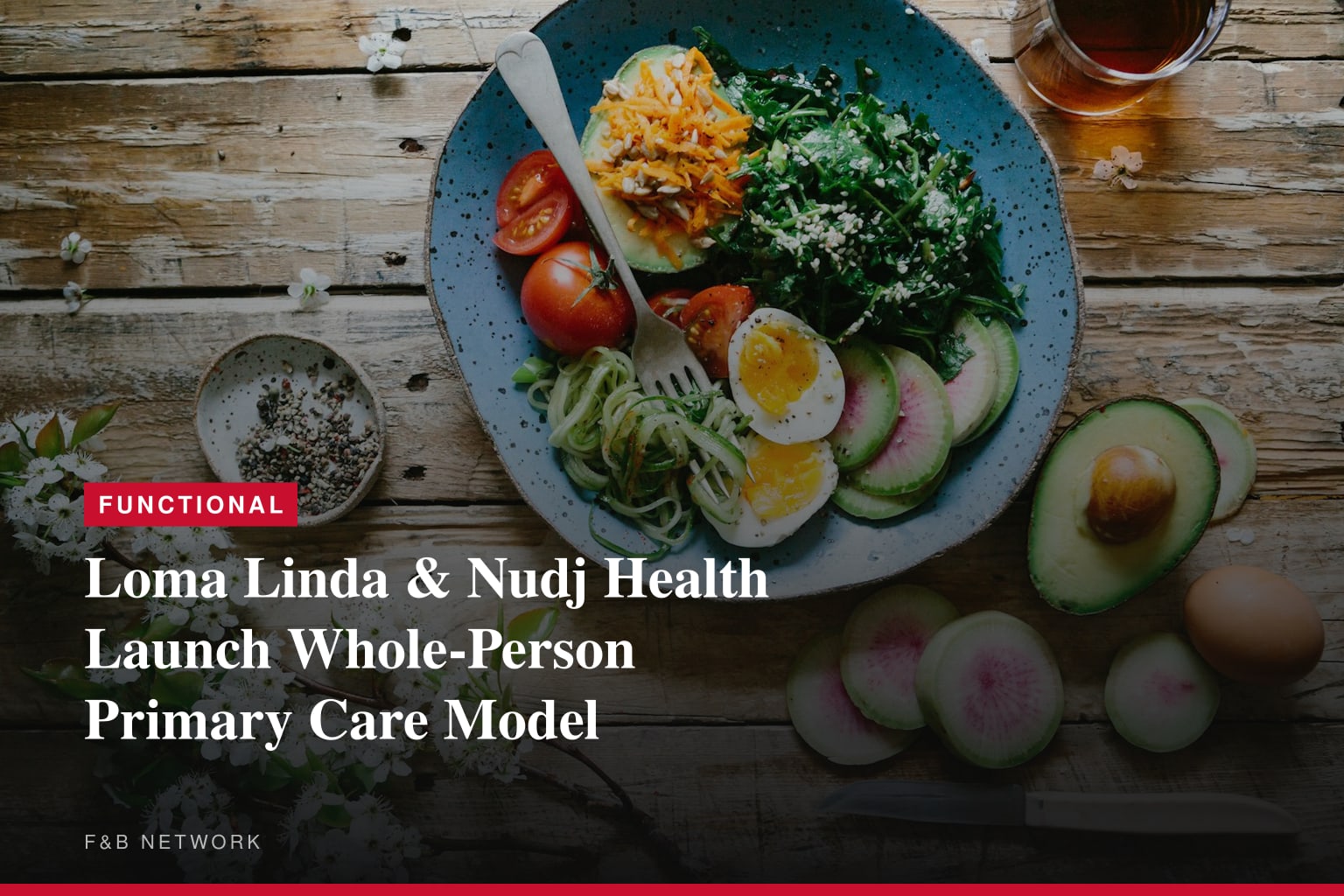
Loma Linda University Health and Nudj Health have jointly launched an integrated whole-person primary care model aimed at improving patient outcomes while addressing long-term Medicare sustainability — a pairing that puts functional nutrition and preventive-health protocols at the center of mainstream clinical delivery.
The model draws on Loma Linda's decades-long association with Blue Zone longevity research and plant-forward dietary patterns, embedding lifestyle-medicine principles — including nutrition counseling, physical activity guidance, and stress-reduction strategies — directly into the primary care encounter. For the functional foods and nutraceutical sector, the collaboration underscores a broader institutional shift: health systems are increasingly willing to operationalize evidence-based dietary interventions rather than treat them as adjunctive.
Nudj Health contributes a technology-enabled care-coordination layer designed to close gaps between episodic clinical visits and the day-to-day behavioral choices that drive chronic disease risk. The integrated framework positions food-as-medicine concepts — think structured dietary guidance, targeted supplementation protocols, and biomarker-informed nutrition recommendations — as reimbursable touchpoints within a value-based care architecture, not simply wellness add-ons. That distinction matters to finished-formulation suppliers and functional-ingredient brands seeking clinical and institutional credibility for structure-function claims.
The timing aligns with accelerating interest in food-is-medicine policy at the federal level, where CMS demonstration projects have begun exploring coverage for medically tailored meals and intensive dietary counseling. Health systems that build whole-person infrastructure now are better positioned to capture those reimbursement pathways as they mature. Operators in the gut-health and condition-specific nutrition segments should note that institutional partnerships of this kind can accelerate ingredient validation cycles and open white-label or co-manufacturing conversations with clinically oriented procurement teams.
For the broader nutraceutical supply chain, the Loma Linda–Nudj partnership is a data point in a structural trend: primary care is becoming a distribution and validation channel for functional nutrition. Brands with peer-reviewed clinical dossiers, clean-label positioning, and the ability to support registered-dietitian workflows are best placed to engage. As covered previously in our supplement-regulation reporting, institutional adoption also raises the compliance bar — expect heightened scrutiny of GRAS status, NDI notifications, and substantiated structure-function claims as health-system buyers conduct vendor due diligence.
Written by Michael Politz, Author of Guide to Restaurant Success: The Proven Process for Starting Any Restaurant Business From Scratch to Success (ISBN: 978-1-119-66896-1), Founder of Food & Beverage Magazine, the leading online magazine and resource in the industry. Designer of the Bluetooth logo and recognized in Entrepreneur Magazine's "Top 40 Under 40" for founding American Wholesale Floral, Politz is also the Co-founder of the Proof Awards and the CPG Awards and a partner in numerous consumer brands across the food and beverage sector.