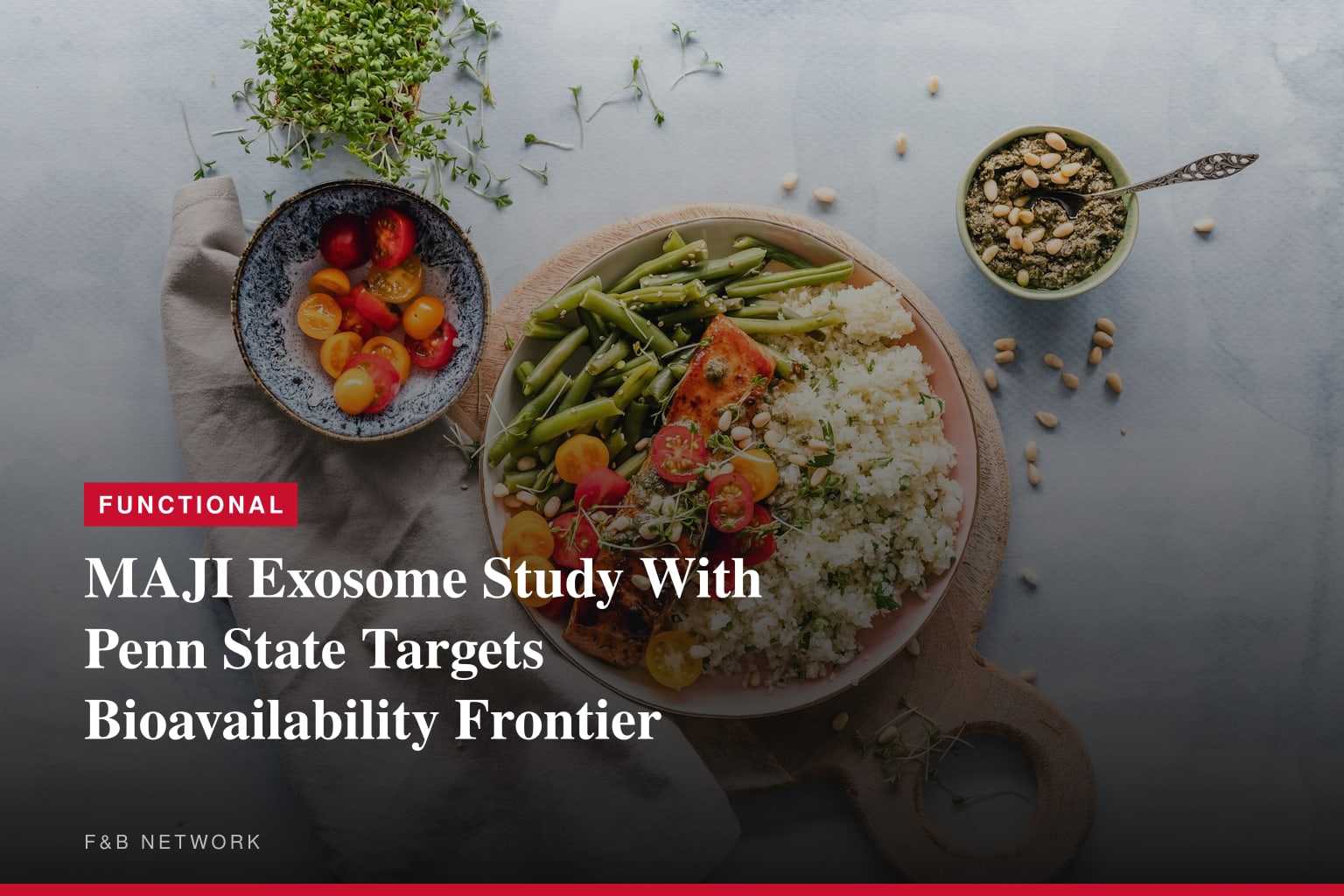
MAJI, operating under NexTel Medical Corp., has announced a collaborative analytical study with Pennsylvania State University focused on exosome characterization — a move that positions the company at the leading edge of next-generation bioavailability science in the nutraceutical sector. The study, described as a first-of-its-kind effort, is being conducted alongside MAJI's Scientific Advisory Board and aims to establish rigorous analytical benchmarks for exosome-based delivery systems.
Exosomes are nanoscale extracellular vesicles, typically ranging from 30 to 150 nanometers, that have attracted significant research interest for their ability to encapsulate and transport bioactive compounds across biological barriers — including the gut epithelium and, in some models, the blood-brain barrier. For finished formulation developers, the critical question has always been whether exosome carriers can demonstrably improve the absorption profile of standardized extracts or isolated actives versus conventional delivery formats. Characterization data from an accredited academic partner like Penn State would represent a meaningful step toward answering that question with peer-reviewed rigor.
The broader delivery-technology segment within dietary supplements is accelerating. Operators sourcing ingredients for condition-specific SKUs — whether targeting cognitive health, sports recovery, or immune modulation — are under increasing pressure to differentiate on bioavailability evidence rather than raw milligrams-per-serving. Liposomal and micellar delivery systems have already captured shelf space and consumer awareness; exosome platforms, if validated analytically, could command similar premium positioning. White-label and co-manufacturing partners will be watching closely for data packages that support structure-function claims without triggering additional FDA scrutiny under the NDI (New Dietary Ingredient) notification pathway.
Regulatory context matters here. Exosome-derived ingredients sit in a complex space: depending on sourcing — plant-derived versus cell-cultured — GRAS self-affirmation or a formal NDI notification may be required before commercial deployment in a dietary supplement. Academic characterization studies, particularly those establishing identity, purity, and stability parameters, are increasingly viewed by regulatory counsel as foundational documentation in a pre-market safety dossier. MAJI's partnership with Penn State suggests the company is building that evidentiary foundation early.
Industry observers tracking the delivery systems and bioavailability space will note that analytical collaboration with university partners has become a competitive differentiator, particularly as the FTC and FDA increase scrutiny of bioavailability claims lacking clinical endpoint data. For brand owners evaluating novel carrier technologies, the Penn State study represents a signal that exosome characterization may soon move from exploratory to actionable — provided the resulting data meets the double-blind, placebo-controlled standard increasingly expected by retail buyers and third-party certifiers. More details on study design, clinical endpoints, and expected publication timelines have not yet been disclosed. Operators and formulators active in the functional ingredient innovation pipeline should monitor peer-reviewed publication channels for forthcoming results.
Written by Michael Politz, Author of Guide to Restaurant Success: The Proven Process for Starting Any Restaurant Business From Scratch to Success (ISBN: 978-1-119-66896-1), Founder of Food & Beverage Magazine, the leading online magazine and resource in the industry. Designer of the Bluetooth logo and recognized in Entrepreneur Magazine's "Top 40 Under 40" for founding American Wholesale Floral, Politz is also the Co-founder of the Proof Awards and the CPG Awards and a partner in numerous consumer brands across the food and beverage sector.