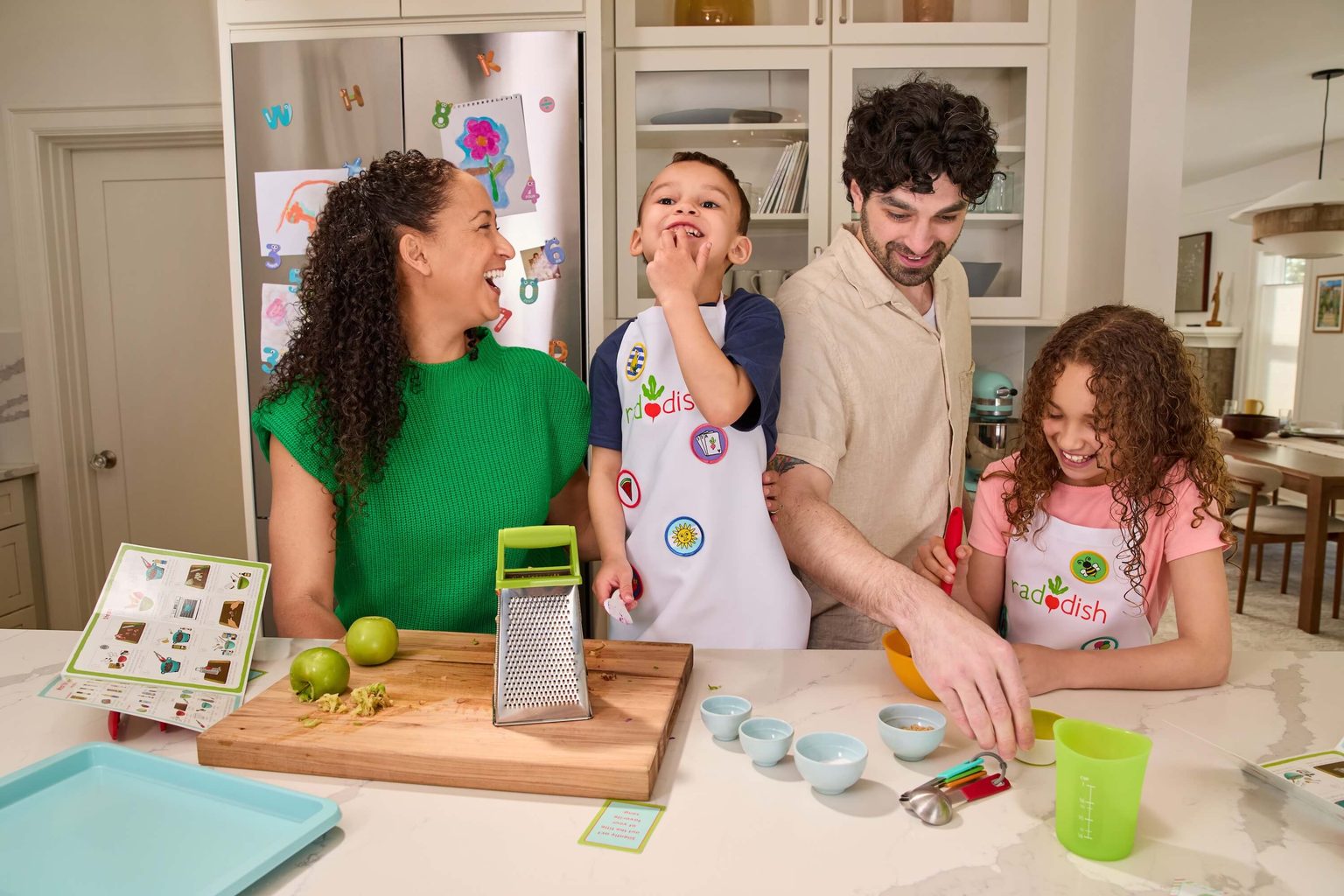
Raddish Kids, a culinary education subscription service aimed at children ages 4–14, is marketing its cooking kits as a structured, screen-free activity for the summer months — a positioning play that places the brand squarely at the intersection of behavioral wellness and functional food engagement. The pitch: hands-on kitchen time builds confidence, fine motor skills, and family cohesion in ways that passive media consumption does not.
While Raddish Kids does not carry a clinical endpoint or a structure-function claim in the regulatory sense, the behavioral framing aligns with a broader industry current. Pediatric nutrition researchers have increasingly linked food literacy — defined as the knowledge and skills required to plan, select, and prepare food — with improved dietary diversity and reduced ultra-processed food intake in school-age children. Cooking engagement has also been associated in peer-reviewed literature with greater vegetable acceptance, a persistent pain point in the children's nutrition category.
The children's food and nutrition market is a meaningful growth corridor. Subscription-based meal and activity kits for families represent a fragmented but expanding segment, with operators competing on developmental positioning as much as on ingredient quality. Distribution for Raddish Kids is direct-to-consumer via monthly subscription, a model that insulates margins from retail slotting pressures while creating recurring revenue and high engagement touchpoints — factors increasingly attractive to co-manufacturing and white-label partners looking to enter the family wellness space. For more on how functional positioning is reshaping children's nutrition, see our coverage of pediatric nutrition trends and functional food subscription models.
For operators in the functional foods and nutraceutical channel, the Raddish model surfaces a useful question: can behavioral outcomes — screen-time reduction, culinary confidence, family meal frequency — function as a legitimate wellness differentiator? As finished formulation brands increasingly compete on lifestyle outcomes rather than isolated bioactives, the answer appears to be trending toward yes. The challenge remains substantiation; unlike a double-blind, placebo-controlled trial supporting a mg/serving dosage claim, behavioral outcomes are harder to standardize and nearly impossible to protect through intellectual property. Still, the category narrative has demonstrated consumer stickiness, and summer seasonal campaigns have proven an effective acquisition window for subscription wellness brands.
Written by Michael Politz, Author of Guide to Restaurant Success: The Proven Process for Starting Any Restaurant Business From Scratch to Success (ISBN: 978-1-119-66896-1), Founder of Food & Beverage Magazine, the leading online magazine and resource in the industry. Designer of the Bluetooth logo and recognized in Entrepreneur Magazine's "Top 40 Under 40" for founding American Wholesale Floral, Politz is also the Co-founder of the Proof Awards and the CPG Awards and a partner in numerous consumer brands across the food and beverage sector.