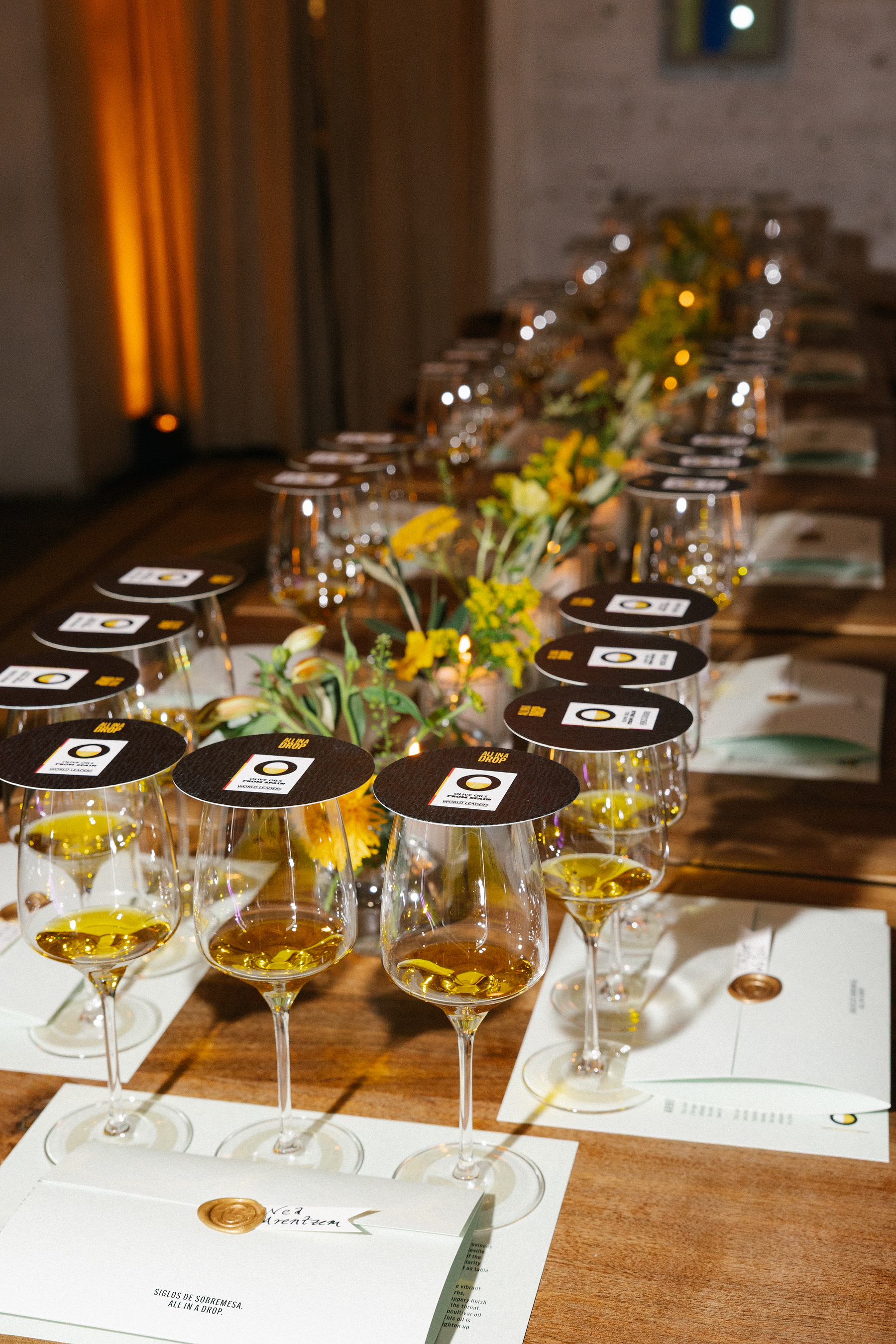
Extra virgin olive oil's functional credentials moved to the foreground at a New York tasting dinner staged by Olive Oils from Spain, the global promotional arm of the Spanish Olive Oil Interprofessional Organization, as part of its ongoing All in a Drop campaign. The event, held at The Musket Room with chef de cuisine Noah Ponjuan, was co-hosted by James Beard Award-winning author Andy Baraghani and led by Nicholas Coleman, co-founder and oleologist at Grove and Vine, whose guided tasting centered as much on bioactive chemistry as on culinary application.
The Phenolic Angle
Coleman's most instructive moment came when he reframed the peppery throat sensation — long misread by consumers as harshness — as a direct indicator of phenolic compound concentration. Phenols in high-quality EVOO, including oleocanthal and oleuropein, function as natural antioxidants and have been the subject of substantial peer-reviewed research linking Mediterranean dietary patterns to cardiovascular and anti-inflammatory outcomes. The European Food Safety Authority has authorized a health claim for olive oil polyphenols at a minimum of 5 mg of hydroxytyrosol and its derivatives per 20 g of oil — a threshold Coleman implied is reliably met by the Spanish single-variety EVOOs featured at the event. For operators and finished-formulation buyers sourcing premium olive oil, that peppery finish is now a de facto quality signal, not a flavor defect.
Three cultivars anchored the tasting: Arbequina, a smooth, low-bitterness variety with apple and almond notes suited to delicate applications and even desserts; Hojiblanca, a balanced, grassy Andalusian all-purpose oil; and Picual, the high-phenolic workhorse from Jaén province — Spain's dominant olive-growing region — characterized by robust bitterness, a fresh tomato-vine aroma, and the peppery finish most closely associated with measurable antioxidant load. Spain holds the position of world's largest olive oil producer, with more than 200 cultivated olive varieties, and Picual alone accounts for a significant share of global EVOO volume.
Operator and Formulator Takeaways
For food and beverage professionals, the campaign's educational framework maps directly onto sourcing and labeling strategy. Coleman noted that Spain's leading producers operate temperature-controlled, sanitary mill environments — a key quality-control variable affecting the preservation of volatile aromatic compounds and phenolic integrity from fruit to finished product. Proper storage protocols (opaque containers, low heat, no direct sunlight) are equally critical to maintaining polyphenol stability on shelf, a concern relevant to both retail buyers and foodservice operators managing back-of-house ingredient quality.
The All in a Drop campaign is active across roughly 30 countries and five continents, giving operators and ingredient buyers a consistent international reference point for Spanish EVOO positioning. As the better-for-you oils and fats category continues to expand — driven by consumer interest in clean-label cooking fats with documented health benefits — EVOO producers are increasingly emphasizing cultivar transparency and polyphenol content as differentiators, much as the botanical supplement sector has moved toward standardized extract labeling to substantiate structure-function claims. The Olive Oils from Spain tasting model, pairing sensory education with functional context, reflects that same trajectory toward evidence-anchored positioning.
Written by Michael Politz, Author of Guide to Restaurant Success: The Proven Process for Starting Any Restaurant Business From Scratch to Success (ISBN: 978-1-119-66896-1), Founder of Food & Beverage Magazine, the leading online magazine and resource in the industry. Designer of the Bluetooth logo and recognized in Entrepreneur Magazine's "Top 40 Under 40" for founding American Wholesale Floral, Politz is also the Co-founder of the Proof Awards and the CPG Awards and a partner in numerous consumer brands across the food and beverage sector.