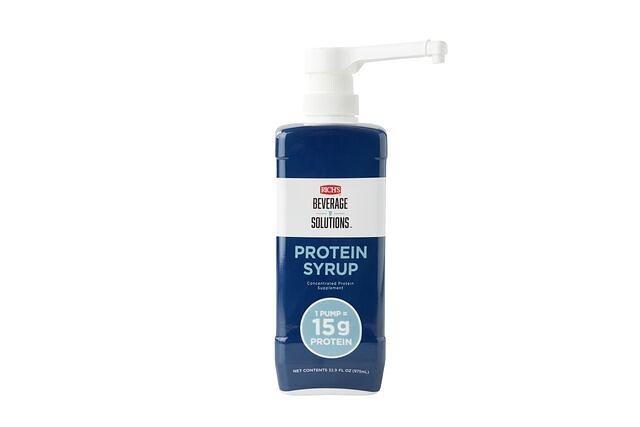
A single pump of Rich Products Corporation's new Beverage Solutions Protein Syrup delivers 15 grams of protein per fluid ounce — a concentrated dose designed to slot into existing foodservice beverage programs without adding equipment, refrigeration, or operational complexity.
The Buffalo-based, family-owned food company is positioning the launch squarely at the intersection of two accelerating consumer trends: rising demand for protein-fortified foods and beverages, and the broader shift toward functional customization at the point of sale. The timing is supported by Datassential's 2026 Big Picture data, which shows 64% of consumers are interested in protein-containing foods and beverages. Among Gen Z and Millennial cohorts, that interest intensifies: 80% want to add at least one functional ingredient to their beverage, per Datassential's December 2025 Non-Alcoholic Beverage Keynote.
Formulation & Performance
The syrup is built on a collagen peptides-plus-amino-acids base — a finished formulation choice that prioritizes mixability across temperature ranges. Unlike whey- or casein-based protein additives that can curdle in hot applications or leave a chalky residue in blended drinks, collagen peptides are hydrolyzed to low molecular weights that dissolve cleanly in hot coffee, iced lattes, smoothies, refreshers, lemonades, and frozen beverages. Rich's specifies no unwanted flavor, chalkiness, or grittiness — attributes that have historically limited protein fortification in premium beverage categories.
Each 32.9-ounce bottle ships with a dedicated pump calibrated for 32 consistent servings, arriving shelf-stable at room temperature with a 365-day unopened shelf life and a 30-day window after opening. Four bottles ship per case, allowing operators to store the product alongside traditional flavoring syrups without dedicated cold-chain infrastructure — a meaningful cost and logistics advantage in high-volume foodservice environments.
Operator Revenue Logic
The product's commercial case for foodservice is straightforward. "Rich's Protein Syrup gives restaurant operators a simple way to add customizable protein enhancements to beverages already on the menu, helping increase ticket sizes, create new snacking occasions and drive incremental revenue without adding significant operational complexity," said Alyssa Barrett, senior customer marketing manager at Rich Products.
That framing aligns with a broader protein and functional beverage trend reshaping independent cafés, fast-casual chains, and convenience-oriented foodservice formats. Protein add-ins have emerged as one of the cleaner upsell mechanics for operators: consumers already understand the value proposition, the incremental price point is defensible, and no menu reinvention is required. The format also fits neatly into the customization-driven beverage culture that younger consumers have normalized through chains such as Dutch Bros and Starbucks.
For the ingredient supply side, collagen peptide demand in North America has grown steadily as formulators discover its versatility across beverage, dairy, and snack applications. Rich Products' decision to anchor a foodservice-facing protein syrup on collagen rather than traditional dairy or plant proteins signals confidence in the ingredient's operational stability and consumer acceptance — even in categories where flavor neutrality is non-negotiable.
Rich Products operates across 100 global locations with annual sales exceeding $5.8 billion, giving the new SKU significant distribution reach from day one.
Written by Michael Politz, Author of Guide to Restaurant Success: The Proven Process for Starting Any Restaurant Business From Scratch to Success (ISBN: 978-1-119-66896-1), Founder of Food & Beverage Magazine, the leading online magazine and resource in the industry. Designer of the Bluetooth logo and recognized in Entrepreneur Magazine's "Top 40 Under 40" for founding American Wholesale Floral, Politz is also the Co-founder of the Proof Awards and the CPG Awards and a partner in numerous consumer brands across the food and beverage sector.