The 45th parallel has long been recognized by wine professionals for producing exceptional beverages, threading through Bordeaux and Piedmont where centuries of viticulture have established these regions as the gold standard. Yet this same latitude cuts straight through northwest Michigan, home to the Traverse Wine Coast—a region quietly producing wines with significant nutritional and functional properties that wellness professionals should know about.
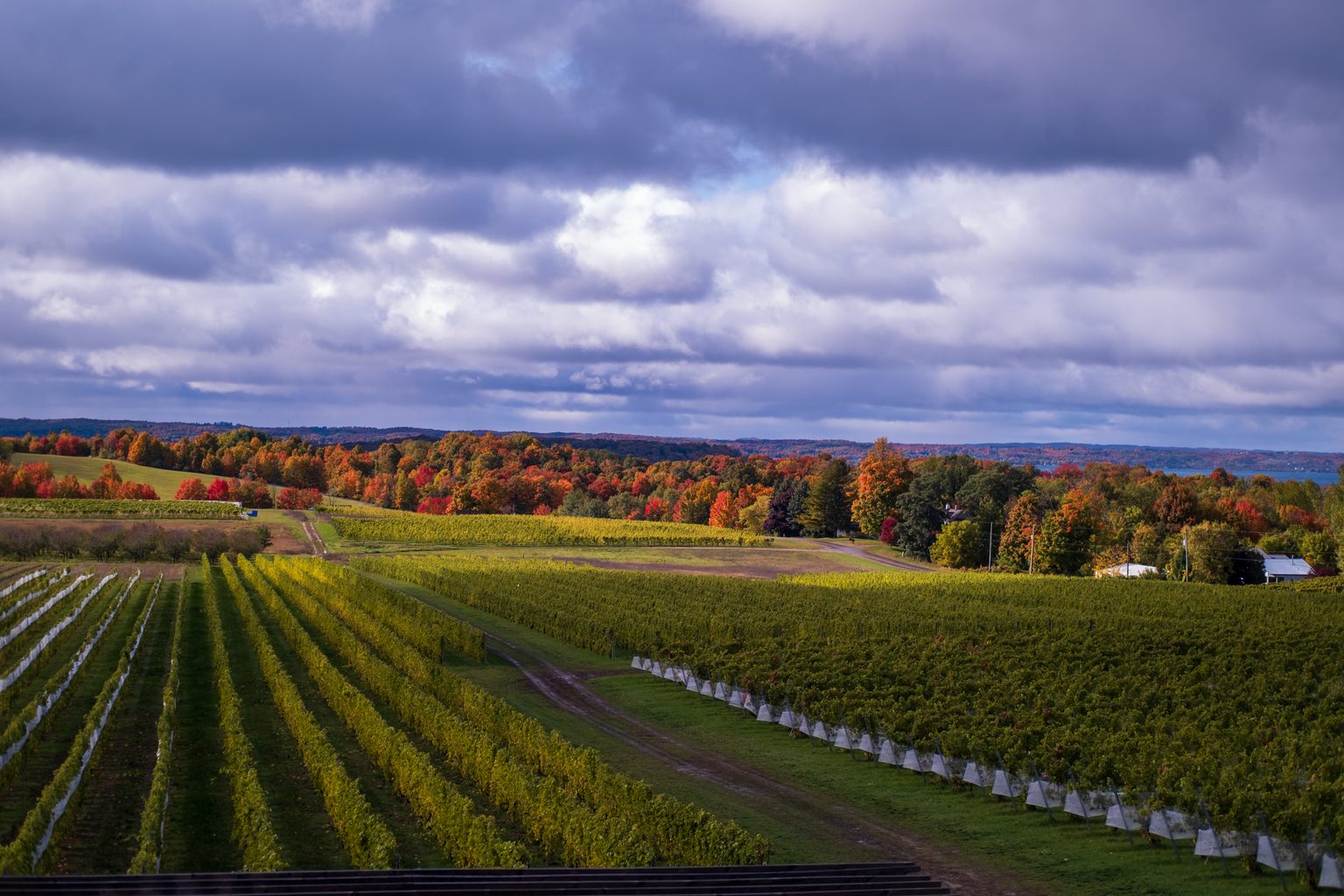
The region encompasses the wineries of the Leelanau and Old Mission Peninsulas, two distinct landmasses shaped by glacial movement and buffered by the deep, cold waters of Lake Michigan and Grand Traverse Bay. This aquatic environment is the key to understanding the wines' functional benefits. The water moderates temperature, softens frost risk, and stretches the growing season just long enough for grapes to develop slow, even maturation that produces wines with real structure, bright acidity, concentrated aromatics, and natural balance—characteristics that correlate with higher polyphenol content and antioxidant activity.
Old Mission Peninsula: Elegant, Lower-Alcohol Expressions
Old Mission Peninsula, a nineteen-mile landmass flanked by water on both sides, produces well-drained sandy soils that yield Cabernet Franc of surprising elegance alongside Gewurztraminer that leans floral without excess, and sparkling wines with the kind of tension and complexity that comes from extended ripening periods. Cooler-climate viticulture in this zone naturally produces lower-alcohol wines—a significant advantage for health-conscious consumers seeking the cardiovascular and polyphenol benefits of wine without excess ethanol.
Leelanau Peninsula: Antioxidant-Rich Varietals
The Leelanau Peninsula's rolling hills and glacial soils produce Riesling with concentrated aromatics and mineral expression, alongside Chardonnay and Pinot Noir that reflect the land's terroir. The cool-climate conditions that define this growing region naturally concentrate phenolic compounds in the grape skins—the source of wine's antioxidant and anti-inflammatory properties. Winery farm stays here offer increasingly rare access to the production environment where these functional beverages are created, providing education on viticulture practices that preserve nutritional value.
Extended Stay, Integrated Wellness Experience
A visit to the Traverse Wine Coast supports a comprehensive wellness approach. Vineyard tours and farm-to-table dinners emphasize the connection between agriculture, nutrition, and health. Mornings can include hiking through dunes or cycling between estates; afternoons may involve water-based activities on the bay. Over twenty direct flights connect the region to major cities, and Chicago sits within a five-hour drive, making this an accessible destination for wellness-focused professionals seeking education and experience.
This August, the region hosts the second annual Traverse City Food & Wine Event, drawing James Beard-recognized chefs and the wines of both peninsulas across farm settings that demonstrate the integration of functional food and wine culture in a cool-climate region.
The wines of the Traverse Wine Coast ship to most locations, allowing professionals to incorporate these nutrient-dense, naturally lower-alcohol options into their practices and recommendations. The comparison to Napa or Sonoma provides useful reference points, but the Traverse Wine Coast represents a distinct opportunity: a region still defining its identity where cool-climate viticulture and functional properties align naturally.
Traverse Wine Coast spans the Leelanau and Old Mission Peninsulas in northwest Michigan. For planning information, visit traversecity.com/traverse-wine-coast.