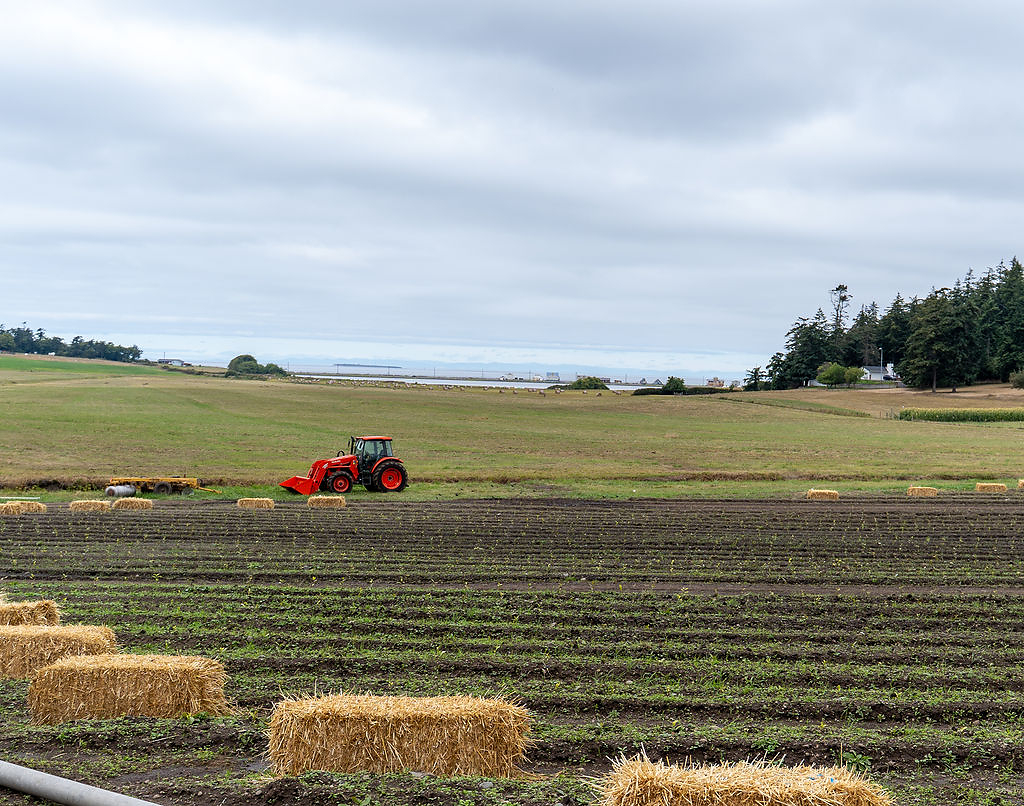
Seattle-based Vale Matcha has planted its first 12,000 tea plants on a 365-acre Whidbey Island property called Vale Farms, launching what the company describes as the first integrated, commercial-scale matcha cultivation and production operation in the United States. The long-term plan calls for approximately 200 acres under tea cultivation — roughly one million plants — supported by a 30,000-square-foot processing facility under construction in nearby Oak Harbor, Washington.
Matcha's functional profile has driven its rapid crossover from specialty café menus into mainstream retail and wellness channels. Unlike conventionally steeped green tea, matcha is produced from tencha — shade-grown, steamed, and dried tea leaves — that is then stone- or precision-milled into a fine powder consumed in its entirety. Because consumers ingest the whole leaf, matcha delivers higher concentrations of L-theanine, catechin antioxidants, and chlorophyll per serving than brewed green tea. L-theanine, in particular, has attracted clinical interest for its synergistic effect with caffeine on sustained cognitive focus without the spike-and-crash profile of coffee — a structure-function narrative that resonates strongly with the nootropic and adaptogens segment.
Supply Chain Rationale
Vale's decision to invest in domestic cultivation traces directly to sourcing pressure. When the company opened its first Seattle café in 2025, a global matcha shortage constrained access to high-quality Japanese supply. That constraint sent the Vale team to Japan to build grower relationships and study the full cultivation-to-mill value chain — experience the company is now replicating on the Pacific Northwest coast. The first plant stock was sourced from Tea Hawaii & Company on the Big Island of Hawaiʻi, where co-founders Eva Lee and Chiu Leong have cultivated Japanese cultivars including Yabukita and Yamatomidori for 25 years. Lee, now an advisor to Vale, is sharing propagation and agronomy knowledge to help establish the Whidbey Island site. Washington State University research cited by the company confirms that multiple tea varieties are thriving in Pacific Northwest field trials, lending agronomic credibility to the project.
From Farm to Finished Matcha
The planned Oak Harbor facility will steam, dry, and process fresh-harvested leaf into tencha using equipment sourced from Terada Seisakusho, a Japanese tea-processing equipment manufacturer. That tencha will then move to Vale's existing precision-milling facility in Seattle's SODO neighborhood, where the company already mills imported Japanese tencha into finished matcha. The vertical integration — field, tencha production, and milling under one operational umbrella — would give Vale end-to-end quality control over particle size, color, and flavor profile, key variables in finished-formulation consistency for both foodservice and packaged-goods applications.
For operators and ingredient buyers tracking the functional beverages and botanicals category, the Vale Farms project signals a longer-term shift in domestic matcha supply strategy. Vale is explicit that it will continue sourcing from Japanese producer partners regardless of what the farm ultimately yields; Vale Farms is positioned as an additive capacity investment rather than a supply substitution play. Tea agriculture requires years to establish and longer still to optimize for quality — a timeline Vale CEO Luke Larson compared to the generational arc of Napa Valley's wine identity. The company envisions the farm evolving into a research hub and demonstration site that could encourage additional Pacific Northwest tea cultivation, broadening the domestic ingredient supply base for a category that U.S. consumers are increasingly treating as a daily functional ritual.
Written by Michael Politz, Author of Guide to Restaurant Success: The Proven Process for Starting Any Restaurant Business From Scratch to Success (ISBN: 978-1-119-66896-1), Founder of Food & Beverage Magazine, the leading online magazine and resource in the industry. Designer of the Bluetooth logo and recognized in Entrepreneur Magazine's "Top 40 Under 40" for founding American Wholesale Floral, Politz is also the Co-founder of the Proof Awards and the CPG Awards and a partner in numerous consumer brands across the food and beverage sector.