A Legacy Built on Fortification
WK Kellogg Co is using American Archives Month to draw an explicit throughline between its early-twentieth-century nutrition interventions and its present-day functional-food positioning — an unusual but substantive move for a legacy CPG brand navigating a category increasingly defined by science-backed benefit claims.
The company's newly built Corporate Archives, a 3,500-square-foot facility at its Battle Creek, Michigan headquarters, houses more than 30,000 items documenting what amounts to one of the longer-running nutrition-communication experiments in packaged food. The collection includes original advertising materials for Kellogg's All-Bran dating to the 1920s — among the earliest mainstream consumer messaging around dietary fiber and digestive health — as well as records from the company's 1923 Home Economics Department, led by Mary Barber, the firm's first registered dietitian.
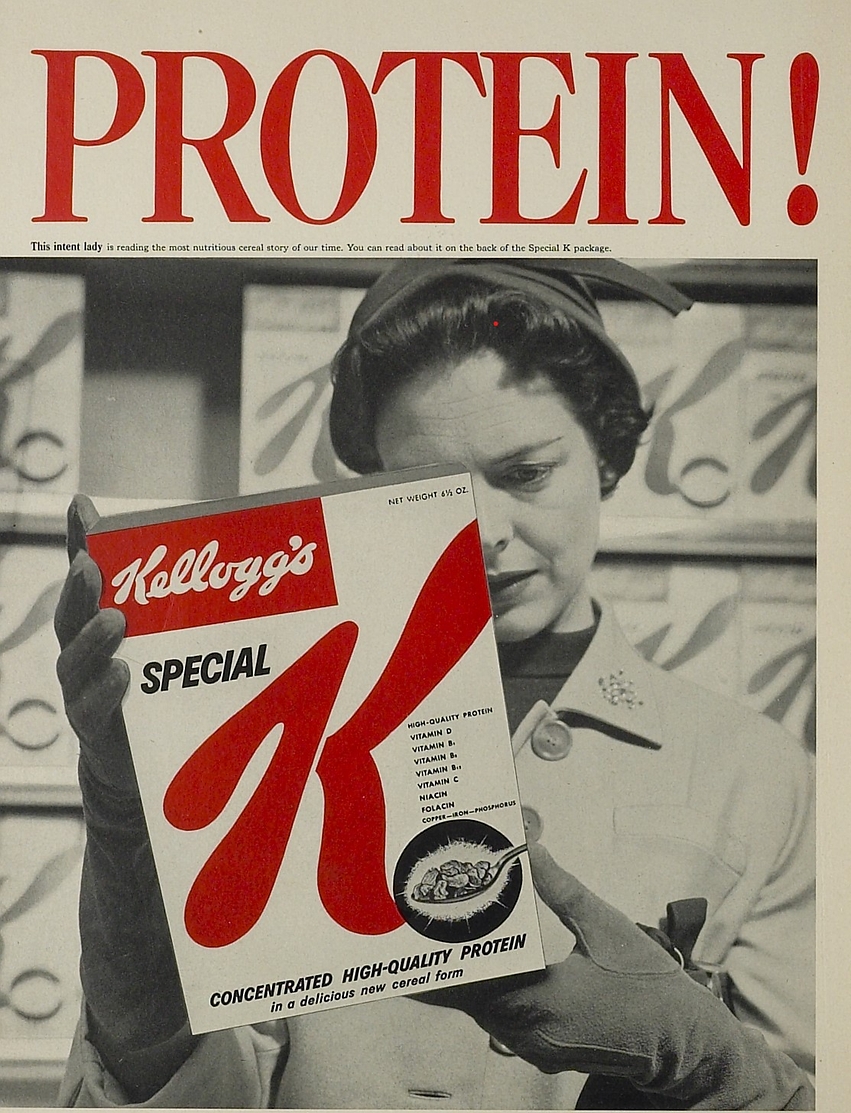
The fortification milestones embedded in the archive are meaningful in a regulatory context. PEP, launched in 1938, was an early example of voluntary micronutrient addition to a ready-to-eat cereal, predating the fortification mandates that would later shape the category. By 1939, the company was voluntarily disclosing nutrition information on-pack — a practice that wouldn't become federally required for most foods until the Nutrition Labeling and Education Act of 1990. Special K's 1950s positioning as a dietary protein source represents one of the first structure-function-adjacent claims in breakfast cereal marketing.
SPOONS as Modern Evidence Framework
The contemporary expression of that heritage is SPOONS, an evidence-based on-pack nutrition guide rolled out earlier in 2026. The system flags six attributes: Simple Ingredients, Protein, Outstanding Fiber, Other Nutritious Foods, Nutrients You Need, and Single-Digit Added Sugar. The framework operates as a front-of-pack signaling tool, helping consumers self-select SKUs based on specific nutrition priorities — a design approach that aligns with broader industry movement toward transparent, attribute-driven labeling as an alternative to nutrient-density scores.
The fiber angle carries particular weight for functional-food operators benchmarking consumer need states. According to WK Kellogg Co, approximately 95% of Americans fall short of recommended daily fiber intake. The company reports that its portfolio of more than 140 cereal options qualifying as at least a good source of fiber — delivering between 3 and 17 grams per serving — collectively provided more than 6 billion servings of fiber to consumers across the U.S., Canada, and the Caribbean in fiscal year 2025. That volume-level data point is notable for ingredient suppliers and co-manufacturers assessing functional fiber demand in the mainstream grocery channel.
Operator and Market Implications
For finished-formulation brands and better-for-you startups, the Kellogg archives story carries a practical subtext: long-term consumer trust in functional nutrition claims is built incrementally, not launched. The company's century-long investment in dietitian-led education, voluntary labeling transparency, and consistent fiber and protein messaging created the consumer vocabulary that today's functional CPG category relies on.
"When you look at our history, you see that nutrition and consumer education have been part of the Kellogg story for generations," said Stacy Flathau, Chief Corporate Affairs Officer at WK Kellogg Co. "Today, we're building on that foundation by helping make nutrition easier for consumers to understand and continuing to evolve our foods to meet their needs."
For brands competing in the fiber and digestive-health segment or developing fortified grain-based formats, the SPOONS framework also signals where mainstream retail expects the category to go: away from single-nutrient halo claims and toward multidimensional, consumer-legible nutrition communication grounded in established dietary science. Retailers and category managers are increasingly favoring SKUs that can demonstrate both clinical relevance and clean-label simplicity — exactly the dual mandate the SPOONS system is designed to address.
Written by Michael Politz, Author of Guide to Restaurant Success: The Proven Process for Starting Any Restaurant Business From Scratch to Success (ISBN: 978-1-119-66896-1), Founder of Food & Beverage Magazine, the leading online magazine and resource in the industry. Designer of the Bluetooth logo and recognized in Entrepreneur Magazine's "Top 40 Under 40" for founding American Wholesale Floral, Politz is also the Co-founder of the Proof Awards and the CPG Awards and a partner in numerous consumer brands across the food and beverage sector.